I have always loved watching the quiet students begin to find their voice, and I give credit largely to the power of positive reinforcement in school.
There is something very special about seeing a child who once held back begin to share their thinking with a little more confidence. It is one of the quiet rewards of teaching.
I am thinking of one particular little girl right now.
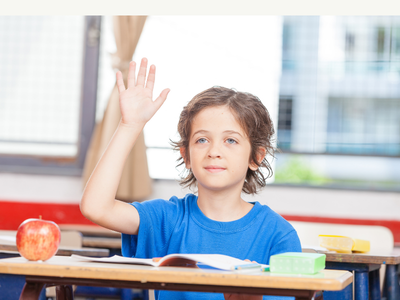
She was very quiet and kind, and quite shy. Speaking seemed difficult for her. Even putting up her hand felt like a risk.
She was in my class for two years, and over that time, I watched her begin to blossom.
At first, it was a raised hand now and then.
Then a willingness to offer an answer.
And eventually, a willingness to try—even when she might not be right.
That kind of growth doesn’t happen by accident.
It grows in classrooms where students feel safe enough to take those small risks.
And positive reinforcement in school is one of the most reliable ways to build that kind of environment.
In my classroom, it became a foundational part of how everything else worked.

What Is Positive Reinforcement in the Classroom?
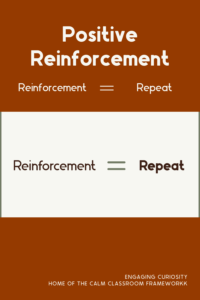
Positive reinforcement in the classroom occurs when teachers acknowledge positive student behaviour in ways that increase the likelihood the behaviour will happen again.
Teachers often use:
- specific praise
- encouragement
- acknowledgement of effort
- recognition of responsibility or kindness
Research in behavioural psychology demonstrates that behaviours followed by positive reinforcement tend to be repeated (Skinner, 1953).
In classrooms, this simply means that when teachers consistently notice positive behaviour, students begin to repeat those choices more often.
Why Positive Reinforcement Matters in Classroom Management
Students naturally repeat behaviours that receive attention and associate those behaviours with success and belonging in the classroom community.
When teachers acknowledge responsible choices, students begin to associate those behaviours with success and belonging in the classroom community.
Research on effective classroom management supports this pattern.
Educational researchers Simonsen, Fairbanks, Briesch, Myers, and Sugai (2008) identified positive reinforcement as one of the core practices of effective classroom management systems, particularly when paired with clear expectations and consistent routines.
Over time, reinforcement strengthens classroom habits.
Students begin to:
- start work more quickly
- participate more confidently
- cooperate with classmates
- manage responsibilities independently
These changes happen gradually through consistent teacher attention to positive behaviours.
The Important Idea
Positive reinforcement teaches students which behaviours belong in the classroom. Consequences help students understand which behaviours do not. Within the Calm Classroom Framework, these two work together to create the clear boundaries and encouragement students need in order to learn.
How Positive Reinforcement Works With Classroom Expectations
Positive reinforcement works best when it is connected to clear classroom expectations and consistent consequences.
Students need to understand both what the expectations are and what happens when those expectations are not followed. Positive reinforcement highlights the behaviours we want to see repeated, while consequences maintain the boundaries that keep the classroom safe and predictable.
In practice, these elements work together as part of the same classroom system rather than as competing approaches.
Research on school-wide positive behaviour systems also emphasizes that reinforcement is most effective when expectations are clearly defined and taught to students (Sugai & Horner, 2002).
Concept Definition
Positive reinforcement occurs when a teacher responds to a student’s positive behaviour with acknowledgement or encouragement that increases the likelihood the behaviour will occur again.
In classrooms, reinforcement is most powerful when it is:
- sincere
- specific
- connected to meaningful effort.
What teachers consistently notice, students consistently repeat.
Examples of Positive Reinforcement in the Classroom
1. Use Specific Praise
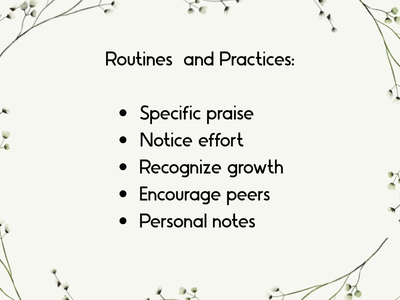
General praise such as “Good job” rarely tells students what they did well.
Specific comments provide clarity.
Instead of saying:
“Good job.”
A teacher might say:
“I noticed how carefully you checked your work.”
or
“You showed real perseverance finishing that writing assignment.”
Students quickly learn which behaviours are valued in the classroom.
2. Recognize Effort and Improvement
Not every student will make the Principal’s List.
However, every student can demonstrate effort.
Recognizing improvement sends a powerful message: progress matters.
Students who struggle academically often need this encouragement the most. When teachers notice effort, students begin to see themselves as capable learners.
3. Reinforce Positive Character Traits
Classrooms are also places where character develops.
Positive reinforcement can highlight qualities such as:
- kindness
- honesty
- responsibility
- perseverance
Acknowledging these behaviours helps students understand their importance within the classroom community.

in addition to academic and athletic achievements.
4. Encourage Peer Recognition
One of my favourite classroom activities involved students offering positive comments to each other.
Once or twice a year we wrote kind observations for every student in the room.
Each child had a sheet of paper, and students walked around the classroom writing one encouraging comment for each classmate.
Students took this activity very seriously.
They loved reading what others noticed about them.
Activities like this strengthen classroom community while reinforcing positive behaviour.
5. Write Personal Notes of Encouragement
Sometimes a short written message can mean a great deal to a student.
This might include:
- a quick note on an assignment
- a message sent home to parents
- a quiet written comment on a student’s work
These small gestures help students feel recognized as individuals.
6. Use Public Positive Reinforcement
In my classroom I had a microphone necklace used for hearing support.
This allowed me to quietly acknowledge positive behaviour while students worked.
As students entered and began their morning tasks, I could say:
“Thank you for getting started right away, James.”
“I appreciate how organized you are today, Amelia.”
“Nice job remembering your tasks, Kenny.”
One day a student explained exactly why this worked.
“When I hear you encouraging my friend, I remember what I need to do.”
Students learn a great deal by observing what teachers notice.
Where Teachers Can Begin With Positive Reinforcement
Teachers do not need complicated systems to begin using positive reinforcement.
A simple starting point is this building positive classroom habits.
For example:
- “Thank you for getting started quickly.”
- “I appreciate how quietly you solved that problem.”
- “That was thoughtful of you to help your partner.”
Small comments like these gradually shift the emotional tone of the classroom.
Common Questions Teachers Ask About Positive Reinforcement
Does positive reinforcement mean students never receive consequences?
No. Positive reinforcement teaches students which behaviours belong in the classroom, while consequences help students understand which behaviours do not. Both work together to create clear expectations and consistent boundaries.
How often should teachers use positive reinforcement?
Positive reinforcement works best when it happens regularly throughout the school day. Small acknowledgements of effort, responsibility, and cooperation help students understand what success looks like in the classroom.
What if students ignore praise?
When reinforcement is specific and genuine, students usually respond over time. If students appear uninterested, it is often helpful to focus praise on effort, improvement, or responsibility rather than general comments like “good job.”
What Teachers Often Notice When Positive Reinforcement Becomes Routine
When positive reinforcement becomes part of classroom life, teachers often notice several changes.
- Students begin reminding themselves of expectations.
- Participation increases.
- Transitions become smoother.
- Quieter students gain confidence.
- The emotional tone of the classroom becomes calmer and more cooperative.
These changes rarely happen overnight, but they build steadily over time.
Final Reflection for Teachers
Teachers have tremendous influence over how students see themselves as learners.
A sincere word of encouragement, spoken at the right moment, can shape how a student approaches learning for years to come.
Positive reinforcement is not complicated.
It simply asks teachers to notice what is already going well—and to let their students know they see it.
Within the Calm Classroom Framework, reinforcement works alongside expectations, routines, and relationships to create the steady classroom environment teachers are working toward.