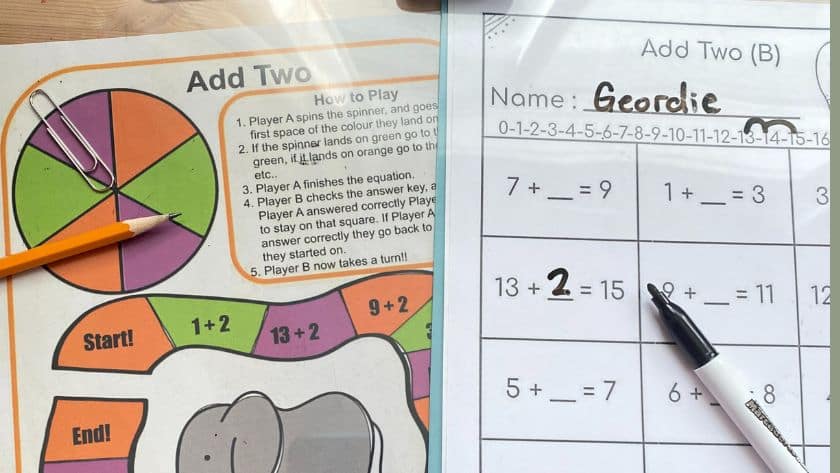
Have you ever felt overwhelmed by the chaos that is a disorganized classroom? If you said yes, you’re not alone. Thankfully, organizing classroom centers doesn’t have to be difficult or complicated. Discover how a few simple strategies can transform your centers into well organized resources, keeping your students focused and excited all year round.
Classroom organization is a pillar to classroom management. Peace in the classroom occurs because everyone knows the routines, everyone knows where to find what they need, and everyone knows how to put things away.
Organizing classroom centers means students can quickly access what they need, and clean up when they’re done.. You will find that learning time is used more effectively and your students will grow in confidence and responsibility in the classroom.
In short, organizing classroom centers can facilitate a more focused, peaceful, and engaged classroom.
Ready to transform your classroom into an organized zone of peaceful learning? Start by implementing one small change today—perhaps reorganize a single shelf or binder. Notice the impact this one change has on your teaching and your students’ engagement. Share your progress or additional tips in the comments below, and let’s how we are organizing classroom centers inspire each other in creating our dream classrooms!
Organizing Classroom Materials
Let me warn you now . . . this blog post is not about Pinterest Pretty organization. Although I love many cute trends on Pinterest and Instagram, I am not sharing the type of organization that needs a lot of matching labels printed in colour with all but 3 of the labels that you need.
I have a simpler version. And I have multiple reasons for my simpler vision:
- Time
- Money
- Preventing visual overwhelm
Time:
I don’t want a system that requires a ton of:
- Cutting
- Laminating
- Recutting
Money
I also don’t want a system that costs a lot of money for:
- Fancy Labels
- Ink
Visual Overwhelm
- Super cute but very busy and colourful labels
- Transparent bins on shelves around the classroom with distracting ‘things’ inside.
Storage for Organizing Classroom Centers
When organizing classroom centers I started by looking at the storage spaces in my classroom. I had a lot of shelves that were just deep enough to hold a binder (as opposed to some of those plastic bins some teachers love). and mostly my storage was bookcases with no front doors.
This storage option meant that whatever I stored was visible all the time. Part of managing a classroom, especially if students are distractable, is to keep down the visual chaos.
Cute labels and folders are so very fun . . . and highly distracting.
In order to minimize the visual chaos in the classroom I wanted a system for my resources that blended into the background. Clear plastic cases with colorful activities on the inside would have been too visually busy.
I chose:
- White binders
- Plastic sleeves
- White labels with black print
No matter if we were practicing Reader’s Theater, exploring math activities or choosing writing prompts, my students delivered their materials back to me in a neat plastic sleeve. I simply put it away, or I put it into the bin for the next group the following day.

Teacher Organization Tools
The beauty of white binders, in addition to the visual piece, was the simplicity of rotating activities. As the seasons and celebrations of the year rotated I could pull out a binder and keep it on a shelf near my desk. As one season ended and the next one started I just simply swapped out the binders.
The plastic sleeves made it easy to move through the binders quickly and to see exactly what was in the sleeves. I also found that my students quickly became comfortable with using the plastic sleeves, even at 6 and 7 years old they were able to be part of taking responsibility for keeping resources organized.
How to Organize Classroom Activities
I kept the binders for each subject area (ie. ELA, Math, Science Units etc.) together on the same shelves. Within the subject area I would keep a separate binder for each topic or type of activity.
For example in the math area I would keep:
- Binders for patterns
- Binders for money
- Binders for geometry
- . . . and so on
Each binder had a label:
- simple black print on a white label (ie. Make Ten, Great Bear Sea, Animals, etc. )
- I typed the labels into a template and printed them off onto adhesive labels
Except when . . . Organizing Classroom Centers for Seasonal Games and Activities
For holiday themed activities I kept those in a series of binders on that theme, for example I kept all of my Christmas themed activities for every subject area together.
I like this because even if I was ahead or behind in the year, I didn’t have to go hunting through subject area resources for ‘that’ activity. It was all together.
Teacher Organization Tips
Within each binder I organized activities in two ways:
1. Organizing classroom centers materials in the order in which they would be used
If we were going to be practicing math facts, for example, I might plan on offering my students a choice of what to do each day. In this case I would organize my binder with dividers between activities, and they would flip to whichever activity they chose.
I may offer color by number one day, a Write the Room activity the next day, and a board game the next day. So within the binder I would have the activities organized:
Imagine how much more engaged your students would be if they could find what they need instantly—doesn’t that sound like a dream?
If I was using small groups that year (some years I needed them, others I did not), I would also organize my binders by level of difficulty.
2. Organize classroom centers materials in levels of difficulty to support differentiation
- Make 10
- Doubles
- Near Doubles
- 10 More
For example if we were working on Space in Science, all of my Space Colour by Code worksheets for each different math strategy would be in the same binder.
Each group would get the appropriate sleeve of activities grabbed from the binder and dropped into their bin. Or they would just flip to that section of the binder, and choose the appropriate math strategy to practice.
Selecting Classroom Activities
Far too much class time can be spent on the “I do, we do, we do, you do”, or gradual release method of ensuring your students understand how to do each activity.
For smooth classroom management during Center activities your students need to know:
- What to do
- How to do it
- Appropriate behaviours
Balance:
- Instructional time
- Skill practice time
- Behaviour management
Give your students similar activities repeatedly, and make sure your students know how to do each activity.
Look for activities and games that have the same rules but different levels of challenge. For example:
- Board games for all the mental math strategies to 20
- Color-by-number for different seasons throughout the year, and all the mental math strategies to 20
- Write the Room task cards for all the different mental math strategies to 20
Organizing Classroom Centers
This is the simple part:
- Pull out the binder with the activity(ies)
- Place the binder on the table or place the activities in the bin your students are to select from.
Done!
How To Make Organizing Classroom Centers Simple
What if you could transform your storage from a source of stress into a pillar of calm and order?
Organizing classroom centers in binders kept me sane as a teacher. I had a tall bookshelf right behind my desk, and I could just turn around during my prep, and what I needed was at my finger tips.
It did take me some time to accumulate all of the white binders I needed, and I was almost there. How you organize your classroom has an impact on your students’ learning. Keep your systems for organizing classroom centers simple for the benefit of both you and your students.


