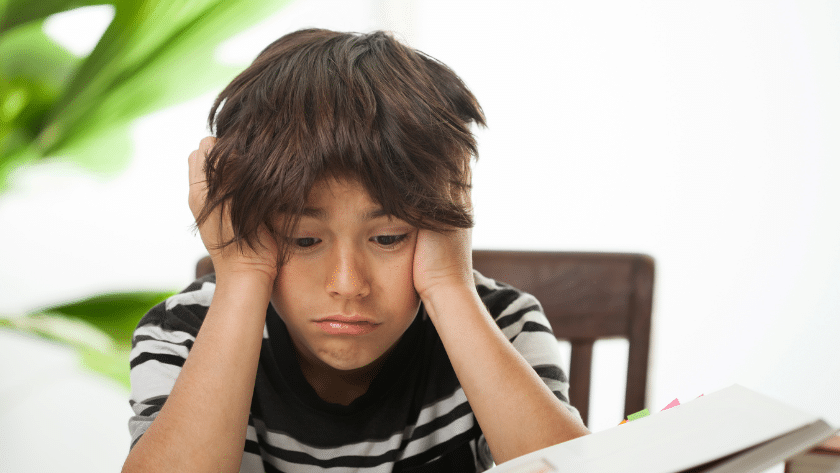
Are you noticing students who shut down quickly, hesitate to take risks, or slip into worried self-talk when learning gets tough? These early signs of a student struggling with resilience in the classroom are more common than you might think, and they often reveal important information about a child’s stress levels, executive skills, and emotional readiness to learn.
With the increasing demands of education today, resilience stands out as one of the most essential traits students need to navigate academic and social pressures with confidence. Building resilience is about more than helping students bounce back from setbacks—it’s about giving them the tools, language, and mindset to independently face future challenges without fear.
This blog will help you define resilience, identify what it looks like, and understand the early warning signs when resilience is developing more slowly.

Why Resilience Matters in Students
Resilient students tend to have stronger emotional regulation, healthier peer interactions, and better academic outcomes. They view challenges as opportunities rather than threats, which leads to stronger coping strategies, perseverance, and increased confidence.
But what exactly is resilience, and how can teachers foster it?
What Is Resilience in the Classroom?
Resilience is the ability to recover from setbacks, navigate stress, and adapt to change with increasing confidence. It’s not about ignoring difficult emotions—it’s about learning how to move through them without shutting down or giving up. In the classroom, resilience helps students persevere, solve problems, and stay engaged even when learning feels challenging .
Resilience is not a fixed trait—it is a learned skill that develops through safe relationships, repeated practice, and emotionally supportive environments. Students become more resilient when they have adults who co-regulate with them, model healthy responses to mistakes, and give them space to try again without shame. In other words, resilience grows through connection and coaching, not pressure or perfection.
If you’re building a calmer, more structured classroom this year, my Classroom Management Checklist can help you get started with confidence.
How Resilience in the Classroom Connects to the Calm Classroom Framework
Resilience is woven through your entire classroom system. For example:
- SEL strengthens resilience by giving students practical tools for emotional regulation and healthy self-talk during challenging moments.
- A strong Classroom Community fuels resilience by creating a sense of belonging where students feel safe taking academic and social risks.
- A Growth Mindset lens nurtures resilience as students learn to see mistakes as normal, expected, and essential to learning.
- Differentiation supports resilience by helping students work within their stretch zone—challenged enough to grow, but not so much that they shut down.
- Predictable organization and routines reinforce resilience by reducing cognitive overload and giving students the stability they need to try new or unfamiliar tasks.
If you want help setting up these foundational systems, my Calm Classroom Management Checklist walks you through each pillar step by step.

Five Characteristics of Resilience
Here are traits commonly seen in resilient students:
- Optimism – Believing mistakes lead to improvement.
- Flexibility – Adapting to changes in routines or plans.
- Perseverance – Continuing to try when something feels frustrating or unfamiliar .
- Emotional Regulation – Handling disappointment or losing a game without becoming overwhelmed.
- Problem-Solving Skills – Brainstorming solutions, compromising, or seeking support during group work.
What Resilience Looks Like in the Classroom
I’ve taught students who struggled to understand that making mistakes is a normal part of learning. Some resisted help because they believed accepting support meant failure. In situations like this, nurturing resilience meant intentionally modeling:
- That mistakes are normal
- How to respond calmly when things don’t go as expected
- The value of feedback
- Positive language around effort and trying again
- Kindness toward classmates who struggle
Students who demonstrate resilience may show:
- Perseverance in participation—continuing to contribute after making errors
- Collaborative problem-solving—negotiating and compromising during group tasks
- Constructive use of feedback—using guidance to improve their next attempt

When Students Lack Resilience
Many behaviours we interpret as defiance are actually protective responses. Avoidance often looks like laziness, but it is usually anxiety. Shutting down may look like disrespect, but it is simply a student trying to stay safe when their emotions feel overwhelming. Negative self-talk isn’t attitude—it’s learned helplessness. When we view these behaviours through a resilience lens, our response becomes kinder, more strategic, and far more effective.
Here are the most common signs:
- Giving up quickly — “I can’t do this,” before trying alternate strategies
- Avoiding challenges — choosing only easy tasks or refusing to begin something unfamiliar
- Negative self-talk — “I’m not good enough,” “I always mess this up,” or put-downs toward peers)
- Low frustration tolerance — tears, shutdowns, or anger when a task feels hard
- Blaming others — externalizing responsibility, which blocks reflection and growth
A Note on Executive Function and Resilience
Resilience is closely tied to executive-function skills—especially flexibility, task initiation, emotional regulation, and working memory. When these skills are still developing, students are more likely to avoid challenges, become frustrated quickly, or shut down when a task feels overwhelming. Supporting executive skills gives students the cognitive tools they need to persevere, adapt, and stay engaged during challenging moments.
In Conclusion
Nurturing resilience is not just about addressing today’s challenges—it’s about equipping students with the lifelong skills they need to approach learning with confidence and curiosity.
If you’d like to explore how resilience fits into your broader classroom community and management foundation, read Blog 81.
Ready to build a calmer, more predictable classroom?
Download my Classroom Management Checklist — a simple, research-backed guide that helps you put the core systems in place so your students feel safe, supported, and ready to learn.
👉 Get the Classroom Management Checklist here.
P.S. If you’re looking for deeper, guided support in building a truly calm, connected classroom, my Calm Classroom Framework course walks you through each pillar step-by-step.
And if you are looking for simple, actionable strategies to build resilience step-by-step, continue to Blog 83: 5 Easy Steps Until You See Resilience in Students.


